
Building a Themed Vinyl Collection: Choose a Genre, Artist, or Era
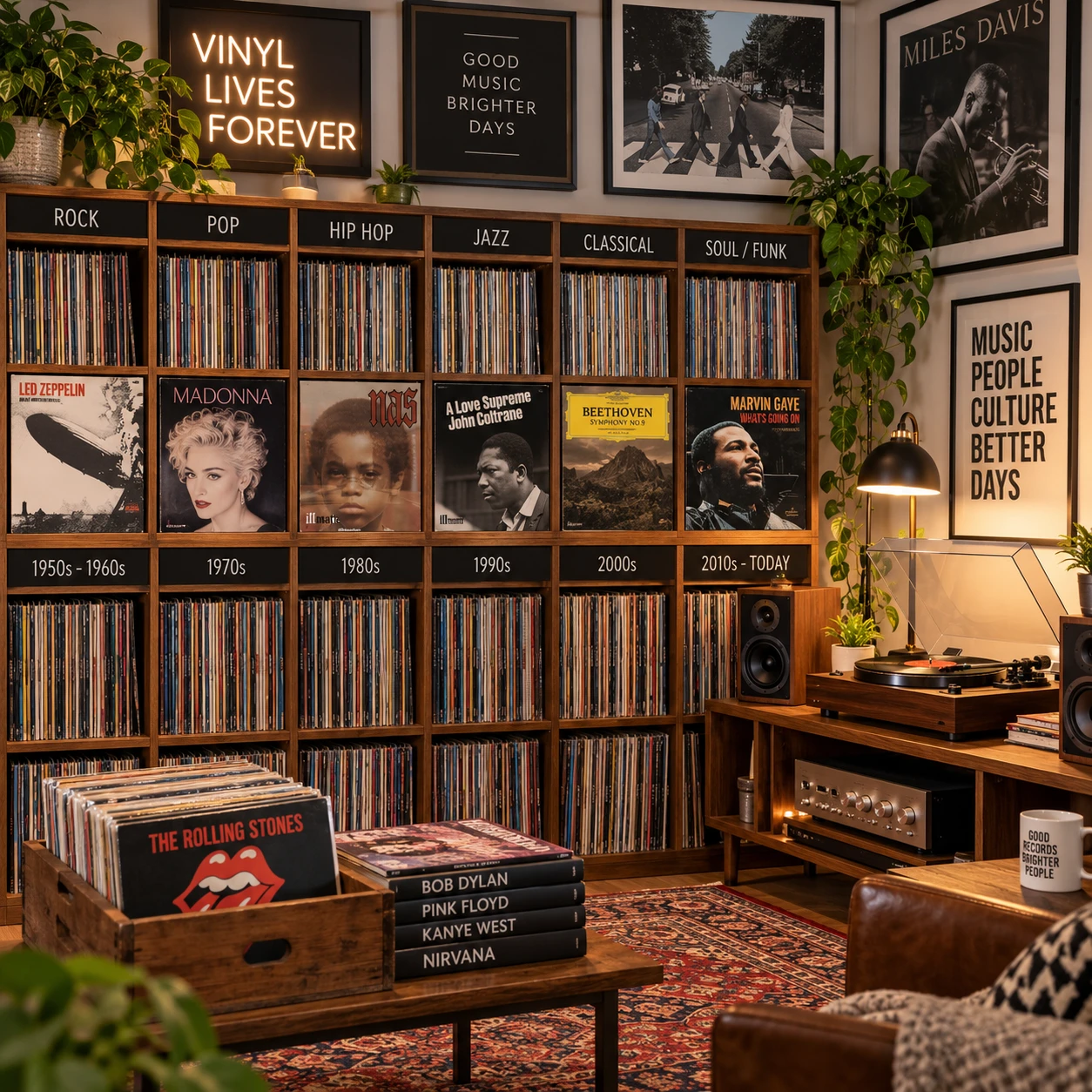
A shelf of records can grow quickly, especially when every interesting album seems worth bringing home. Choosing a theme gives your vinyl record collection direction: you might follow a music genre, trace an artist discography, or explore a musical era. The aim is not to own everything. It is to shape a collection that reflects what you love to hear and leaves room for discovery.
Why Give Your Vinyl Collection a Focus?
A focused vinyl collection gives you a clear reason to buy, makes your records easier to organize, and helps each new album add meaning to the shelf. A theme can also make collecting more manageable by narrowing the choices you face in record shops and online listings.
Without a focus, it is easy to buy familiar favorites, attractive covers, or whatever happens to be in the bargain bin. A theme gives you a useful question to ask before purchasing: Does this record deepen the collection I want to build? That question can prevent impulse buys without turning collecting into homework.
A theme also creates a path for listening. A collection centered on Chicago house, for example, can lead from foundational releases to labels, DJs, and later sounds influenced by the scene. An artist-focused shelf can reveal how a musician’s songwriting or production changed over time. Either way, the records become a personal map of musical connections.
Keep the focus flexible. If a theme becomes a checklist that makes you feel pressured to buy records you do not enjoy, it has stopped serving its purpose. Collect for listening and curiosity first; completeness and rarity are optional goals, not requirements.
Choose a Theme That Fits Your Listening Habits
The best collecting theme is one you will enjoy exploring repeatedly and can pursue within your budget. Compare a genre, artist, or era by asking what you listen to most, how broad a collection you want, and how much research or searching sounds fun.
A genre theme offers variety: you can hear different artists, labels, and subgenres while keeping a recognizable sound or tradition in view. Its challenge is defining boundaries, since genres overlap and change over time. An artist theme gives you a clear center and a natural chronology, but popular artists may have extensive discographies and costly limited editions. An era theme captures a wider musical moment, though you will need to decide which years and scenes belong in it.
Try a small test before committing. Write down ten records you already own or want to hear, then see whether they form a coherent group. If your list keeps branching into unrelated interests, narrow the scope. For example, “jazz” could become “Blue Note hard bop from the late 1950s and early 1960s,” while “records from the 1980s” could become “UK post-punk albums released between 1978 and 1984.”
You can also combine approaches. A collection might focus on an artist’s solo albums and collaborations, or on a genre during one decade. A tighter theme is easier to manage, but a broader one gives you more room to follow unexpected connections.
Build Around a Genre
To build a genre-based collection, define what counts, explore its subgenres, and choose records that show more than one side of its sound. Start with a few influential or personally meaningful albums, then expand through artists, labels, and scenes connected to them.
Genre labels are useful guides, not strict rules. Punk, soul, techno, and folk each contain distinct regional scenes and shifting styles. Rather than trying to settle every classification debate, write a short scope statement for yourself. “Detroit techno from the 1980s onward” is easier to use while browsing than “electronic music.” You can revise it as your listening changes.
To represent a genre’s range, look for records that offer different entry points:
- Foundational albums that help explain the genre’s early sound or influence.
- Subgenre examples that show how artists developed distinct approaches.
- Regional or label connections that reveal local scenes and production styles.
- Later releases that show how the music changed or reached new audiences.
Use listening as your guide. If you are building a reggae collection, you might move between ska, rocksteady, roots reggae, and dub, while deciding which branches you want to emphasize. That approach creates variety without requiring you to buy every album ever associated with the genre.
Build Around an Artist
An artist-based collection works best when you begin with the albums you most want to hear, then add related releases selectively. Start with key studio albums or a period of the artist’s work; later, consider singles, collaborations, live releases, and alternate editions if they add something you value.
First map the artist discography in broad strokes: studio albums, major changes in lineup or sound, and important collaborations. A simple timeline can help you decide whether you want a complete run, a favorite period, or a selection of albums that tells a coherent story. For a group, decide whether solo projects by members fit your scope.
Singles and live records can reveal material that studio albums do not. Collaborations may connect your collection to other artists or scenes. Alternate editions, including an original pressing, a reissue, or a different mix, are worth pursuing when you enjoy comparing them or value their packaging. They are not automatic upgrades. A clean, affordable reissue may be a more satisfying choice than an expensive original pressing in poor condition.
Artist collecting can become costly when rarity takes priority over listening. Set a rule before you browse, such as buying the core albums first and considering limited editions only after you know the music. This keeps the collection centered on the artist rather than on the chase.
Build Around an Era
An era-based vinyl collection explores music made during a defined span of time, often through the artists, sounds, and releases that shaped it. Choose a clear start and end date, then decide whether your focus is a decade, a movement, or a particular scene within that period.
A decade is an easy starting point, but it may be too broad to guide purchases. You could narrow “1970s rock” to “British progressive rock, 1970–1975,” or explore “New York hip-hop from 1979 to 1989.” A specific window makes it easier to compare records and gives your catalog a useful organizing principle.
Consider what “from an era” means in your collection. You might collect albums originally released during those years, or include later reissues of the same recordings. The first approach follows release history; the second makes the music more accessible and may help you find copies in better playing condition. Note the distinction in your catalog so a modern reissue does not get mistaken for a period pressing.
Era collecting rewards context. Pay attention to changes in production, instrumentation, cover design, and the way artists responded to one another. You do not need every well-known release. A handful of records that speak to different parts of the period can tell a richer story than a shelf filled by date alone.
Set Priorities, a Budget, and a Buying Plan
A buying plan helps you pursue a theme without letting record prices or scarcity dictate every decision. Make a wish list, rank records by listening value, and set a collection budget that leaves room for condition checks and occasional discoveries.
Divide your list into three groups: must-haves that define the theme, next choices you would be happy to find, and optional additions such as alternate pressings or related releases. This is a practical filter in a shop: if a record is not on the list, ask whether it genuinely expands your theme before buying it.
Set a monthly or quarterly spending limit that fits your finances. Prices vary by title, market, pressing, and condition, so avoid building a plan around assumed resale value. Vinyl collecting is unpredictable as an investment; a record’s price can change, and condition strongly affects what someone may be willing to pay. Buy because you want the music or the edition, not because you expect a guaranteed return.
Check album condition before you pay. Look for scratches, warps, dirt, seam splits, ring wear, and damage to the center label. Ask whether the record has been play-tested, and inspect the sleeve separately from the vinyl: a clean disc in a damaged jacket and a pristine cover around a noisy disc are different compromises. For used records, the seller’s grading system may help, but listen to the record when possible and ask clear questions if buying remotely.
When comparing an original pressing with a reissue, consider sound, price, condition, and what you personally value. An original can offer period packaging or historical interest; a reissue can be easier to find and less expensive. Neither label tells you by itself whether a copy sounds better or suits your budget.
Organize and Evolve the Collection
Simple cataloging and consistent storage make a themed collection easier to use, protect, and expand. Record the details that help you find albums and make informed choices next time you shop, then review your theme as your interests develop.
A spreadsheet or cataloging app can track artist, album title, release year, label, catalog number, pressing details, condition, purchase price, and whether you own an original pressing or reissue. You do not need to capture every detail on day one. Start with artist and title, then add pressing and condition information when it matters to your collecting goals.
Choose a physical arrangement that supports how you browse. You might file records alphabetically by artist, chronologically by release date, or by subgenre within a larger theme. Add simple dividers if you often search for a particular era or section. Store records vertically in a stable, dry place and avoid packing them so tightly that removing a sleeve damages it.
Every few months, look over the shelf. Which records do you play? Which parts of the theme feel thin, and which purchases were driven mainly by pressure to complete a set? Update your wish list and scope accordingly. A themed collection can grow, narrow, or shift toward a neighboring interest. Its value lies in the listening and connections it makes possible, not in reaching a finish line.
Frequently Asked Questions
Is it better to collect a genre, one artist, or a specific era?
None is best for everyone. Choose a genre for variety, an artist for a focused discography, or an era for historical context. The right fit is the theme you will enjoy exploring and can afford to pursue.
Do I need original pressings to build a themed collection?
No. Reissues can make music more accessible and may be easier to find in good condition. Choose an original pressing when its history, packaging, or sound matters to you, rather than treating it as a requirement.
How can I collect vinyl on a limited budget?
Prioritize essential albums, set a spending limit, and compare prices across record shops and used listings. Consider reissues and clean secondhand copies, and skip expensive variants that do not add meaningful listening or historical value for you.
How do I keep a themed collection organized?
Use a simple catalog with artist, title, release year, pressing, and condition. Arrange the records alphabetically, chronologically, or by subgenre, and keep the system consistent enough that you can find a record quickly.