How to Start a Vinyl Record Collection on a Budget
Starting a vinyl record collection doesn't require a trust fund or expensive audiophile equipment. With smart sourcing, a modest setup, and intentional choices, you can build a meaningful collection for a fraction of what you'd expect to spend.
Why Vinyl Collecting Doesn't Have to Be Expensive
Vinyl collecting has an intimidating reputation, but the entry barrier is lower than most people think. You can start with as little as $150-$200 for a basic turntable setup and build your collection gradually at $1-$5 per record from the right sources.
The inflated prices you see online for rare pressings or collector's editions represent a tiny fraction of what's actually available. Millions of records from the 1960s through 1990s sit in thrift stores, estate sales, and bargain bins because they were mass-produced. A Beatles album that sold 10 million copies isn't rare, and you shouldn't pay rare prices for it.
The real advantage for budget collectors: most music fans care about listening, not speculation. You're not competing with investors when you shop at your local Goodwill or browse dollar bins at record fairs. You're just looking for records you want to hear.
The Gear You Actually Need (And What You Can Skip for Now)
To play vinyl records, you need three things: a turntable with a working cartridge, a phono preamp, and speakers or headphones. Many entry-level turntables include a built-in preamp, and you might already own suitable speakers.
The turntable is your primary investment. Expect to spend $100-$150 for a decent new belt-drive turntable from brands like Audio-Technica (AT-LP60X) or Victrola, or $50-$100 for a quality used model from Craigslist or Facebook Marketplace. Look for models that track at the correct weight and have a replaceable stylus. Avoid suitcase-style all-in-one players with attached speakers—they often damage records over time.
Direct-drive turntables offer more consistent speed and durability than belt-drive models, but they typically cost more upfront. For budget collecting, a belt-drive model works fine and costs $30-$50 less on average.
If your turntable lacks a built-in preamp, you'll need an external phono preamp ($15-$30) or a receiver with a phono input (often found used for $20-$40). For amplification, powered computer speakers, a Bluetooth speaker with an aux input, or even a basic stereo system will work initially. You don't need studio monitors or vintage tube amps to enjoy vinyl.
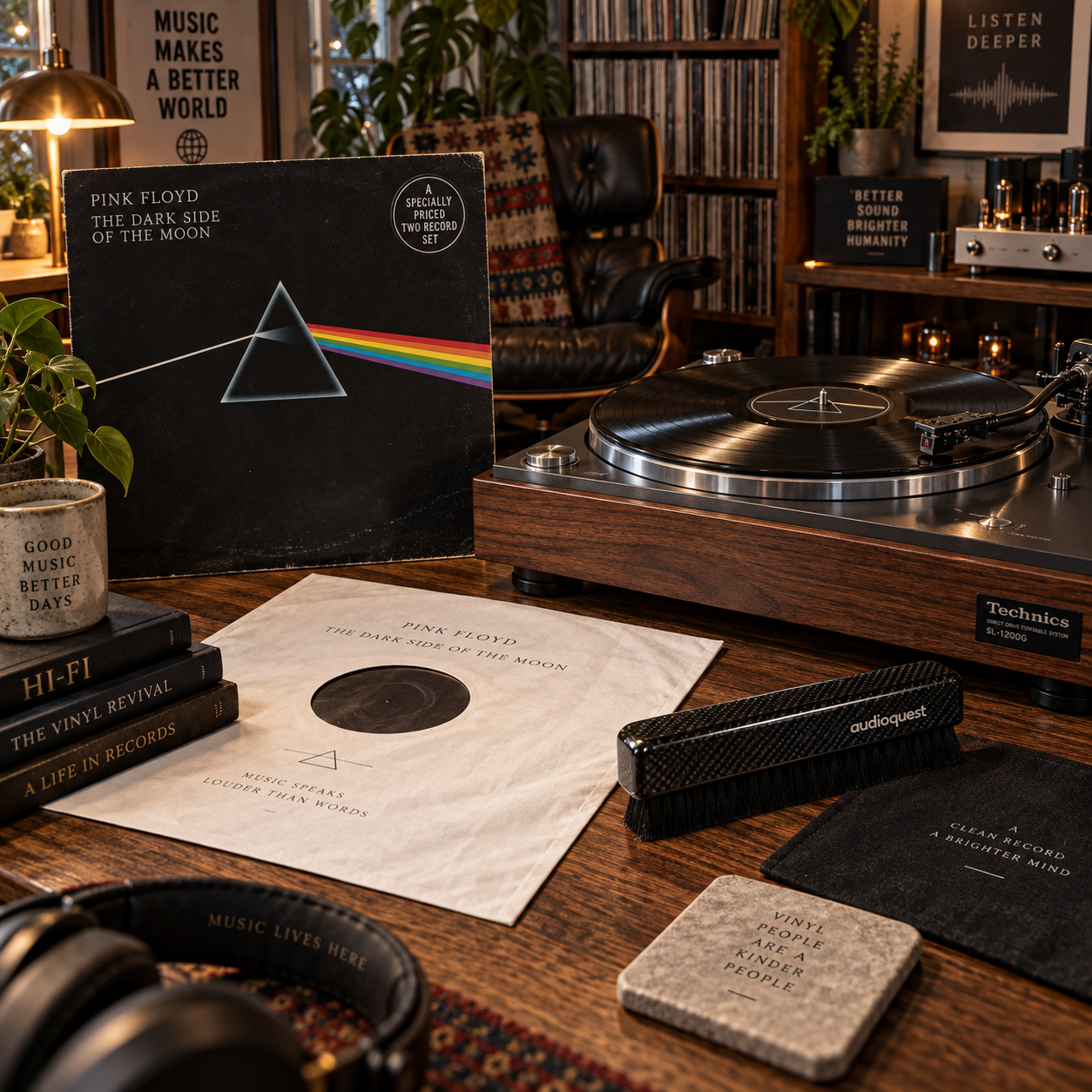
What you can skip for now: Record cleaning machines ($100-$500), anti-static brushes beyond a basic $10 carbon fiber brush, upgraded cartridges, isolation platforms, and dedicated listening rooms. Start simple and upgrade only when you identify specific problems worth solving.
Where to Find Cheap Vinyl Records
The best sources for affordable vinyl are thrift stores, charity shops, record fairs, estate sales, and online marketplaces like Discogs. Each has different advantages depending on your time, location, and what you're hunting.
Thrift stores and charity shops price records at $1-$3 regardless of title because staff usually don't research values. You'll dig through a lot of Barbara Streisand and unknown easy listening, but patient hunters find gems weekly. Go during weekday afternoons when competition is lighter, and build relationships with staff who might alert you to new arrivals.
Record fairs and flea markets offer more curated selection than thrift stores but higher prices ($3-$10 per LP on average). Vendors know what they have, but you can negotiate, especially when buying multiple records. Arrive early for best selection or late for potential discounts when sellers want to pack lighter loads.
Discogs is an online marketplace where sellers list millions of records with detailed condition information. Filter by price (lowest first) and focus on VG or VG+ condition records from sellers in your country to minimize shipping costs. Buying 5-10 records from one seller saves significantly on shipping versus separate orders. Set a maximum per-record budget before browsing to avoid impulse purchases.
Local classifieds (Facebook Marketplace, Craigslist) occasionally feature whole collections for sale when someone moves or clears out a relative's estate. A $50-$100 lot of 50-100 records often contains 10-15 keepers you'd have paid $5-$8 each for separately. Just verify the seller will let you inspect condition before buying.
How to Evaluate a Record Before You Buy It
Inspect every used record visually for scratches, scuffs, and warping before buying. Hold the record at an angle under light to see surface damage—deep scratches that catch your fingernail will cause audible pops and clicks during playback.
Condition grading uses standard terms: Near Mint (NM) looks unplayed, Very Good Plus (VG+) shows light signs of use but plays cleanly, Very Good (VG) has visible wear with some surface noise, and anything below VG typically has significant playback issues. For budget collecting, VG and VG+ offer the best value—they play fine but cost 40-60% less than NM copies.
Check for warping by holding the record at eye level and looking across the surface. Slight warps don't always affect playback, but severe warps cause the stylus to jump or track poorly. Spin the record slowly and look for consistent flatness.
Examine the label for water damage, mold spots, or writing that might indicate mishandling. A musty smell suggests mold in the grooves, which requires cleaning before playing to avoid spreading to other records or damaging your stylus.
Common mistake: Buying records based solely on artist recognition without checking condition. A scratched Beatles album isn't a deal at any price if it skips through your favorite track. Inspect first, then decide if the price matches the condition you're getting.
Building a Collection Around What You Love
Start with artists, albums, and genres you already enjoy rather than chasing collectible pressings or trending releases. A $2 thrift store copy of an album you'll play monthly provides more value than a $30 "investment" record you never spin.
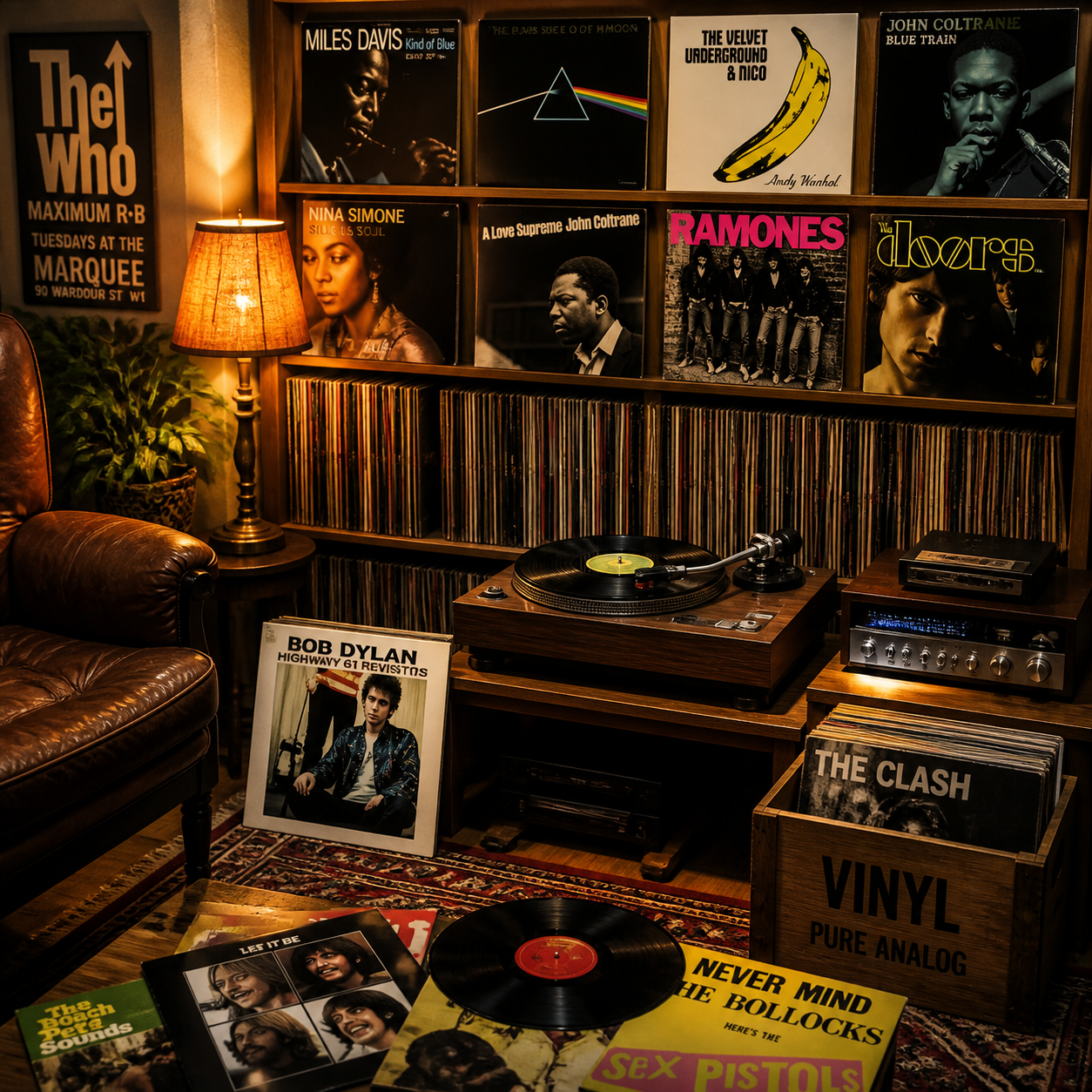
Focus early purchases on building depth in one or two genres you know well. If you love classic rock, systematically work through the catalogs of your favorite bands. If you're into jazz, start with accessible albums from Miles Davis, John Coltrane, or Dave Brubeck before exploring obscure labels. This focused approach costs less than sampling randomly and teaches you to recognize good prices within your preferred style.
Buy 45 RPM singles when you want one hit song without committing to a full LP. Singles cost $0.50-$2 at thrift stores and let you sample artists cheaply before investing in their albums. They're also easier to store when space is limited.
Ignore the hype around colored vinyl, limited editions, and reissue campaigns marketed to collectors. A standard black pressing from the 1970s often sounds identical to a $40 "audiophile" reissue and costs 90% less. You're collecting music to listen to, not sealed investments to flip later.
Simple Record Care on a Tight Budget
Protect your records by storing them vertically (never stacked flat), keeping them in inner sleeves, and cleaning them before first play. These habits cost almost nothing but prevent damage that would force you to replace records later.
Replace paper inner sleeves with poly-lined or polyethylene sleeves (available for $10-$15 per 50-pack). Paper sheds fibers that create surface noise, while plastic sleeves protect the vinyl from scuffs when sliding in and out of the jacket. This upgrade costs $0.20-$0.30 per record and makes a noticeable difference.
Clean used records with a basic solution of distilled water and a drop of dish soap applied with a microfiber cloth, wiping in the direction of the grooves (circular, not across). Let them air dry completely before playing. A carbon fiber brush ($10-$15) removes dust before each play and should be your first cleaning tool purchase.
Store records away from direct sunlight, heat sources, and humidity. A bookshelf or inexpensive cube storage unit works fine—you don't need specialized record storage furniture. Keep your collection upright with enough support that records don't lean at steep angles, which can cause warping over time.
Setting a Budget and Sticking to It
Set a monthly spending limit based on discretionary income—$20-$40 monthly builds a substantial collection over time without financial stress. At $3-$5 per record, that's 5-10 new additions monthly or 60-120 records in the first year.
Prioritize quality over quantity, especially early on. Three records you'll play repeatedly provide more enjoyment than ten mediocre albums bought because they were cheap. Ask yourself if you'd pay to stream or download an album before buying the vinyl version. If the answer is no, skip it regardless of price.
Track your spending for the first few months to identify where money goes. Many beginners overspend at record fairs in the excitement of the moment, then regret impulse purchases later. Bring cash in your budgeted amount and leave cards at home to enforce discipline naturally.
Build slowly and let your collection grow organically with your taste. Rushing to fill shelves leads to buyer's remorse and wasted money on records you don't actually want. A focused 50-record collection you love beats a random 200-record pile accumulated through poor impulse control.
Frequently Asked Questions
What is a good starter turntable for beginners on a budget?
The Audio-Technica AT-LP60X ($129 new) offers reliable performance with a built-in preamp and requires no setup adjustments. For used options, look for vintage models from Technics, Pioneer, or Realistic in the $50-$100 range, but verify the stylus condition before buying.
How much should I expect to spend to get started?
Expect $150-$200 total for turntable, preamp (if needed), and basic speakers, plus $20-$50 for your first 10-15 records from thrift stores or dollar bins. You can start for less if you buy used gear or already own suitable speakers.
Is it better to buy used or new vinyl records?
Used vinyl offers dramatically better value for budget collectors—you'll pay $1-$5 for records that cost $25-$35 new. Buy new only for current releases unavailable used or when you want to support specific artists directly.
How do I know if a secondhand record is worth buying?
Inspect for deep scratches, warping, and mold, then assess whether the condition matches the price. A VG condition record should play without significant issues, so anything priced under $5 is low-risk if it passes visual inspection.
Can I find good records at thrift stores, or is it just junk?
Thrift stores carry plenty of unwanted records, but patient diggers find quality albums regularly. Focus on stores in areas with older demographics, visit frequently, and expect to sort through 50-100 records to find 2-3 keepers per trip.