The History of Vinyl Records: From Invention to Modern Revival
Vinyl records have traveled an unlikely path—from revolutionary invention to obsolete relic to coveted collectible. Understanding this journey reveals not just technological progress, but also how we relate to music as both art and physical object. Today's vinyl revival isn't simply nostalgia; it represents a deliberate choice about how we experience sound in an increasingly digital world.
The Birth of Recorded Sound: Early Experiments and Edison's Phonograph
Thomas Edison invented the phonograph in 1877, creating the first device capable of both recording and playing back sound. His cylinder-based system wrapped tin foil (later wax) around a rotating drum, with a stylus that carved acoustic vibrations into the material as users spoke or sang into a horn.
The phonograph was groundbreaking but impractical for mass music distribution. Each cylinder was essentially unique—you couldn't press copies like books. Recording quality was poor, playback time maxed out around two minutes, and the cylinders wore out quickly. Still, Edison had proven something revolutionary: sound could be captured, stored, and replayed. This concept alone shifted how humanity thought about music, memory, and time.
Early phonographs found use in business offices for dictation rather than entertainment. The idea of recorded music as a consumer product hadn't fully formed yet. That required a different approach entirely—one that came from Edison's competitor across the Atlantic.
Emile Berliner and the Gramophone: The Disc Format Emerges
Emile Berliner introduced the gramophone in 1887, which used flat discs instead of cylinders. This seemingly simple change solved the mass production problem that plagued Edison's format—discs could be stamped from a master recording, creating thousands of identical copies.
Berliner's early discs were made from shellac, a resin-based material that was brittle but could be molded under heat and pressure. These 78 RPM records became the industry standard for nearly 50 years. The disc format had practical advantages beyond manufacturing: they were easier to store, label, and ship than cylinders. You could see the grooves, which gave users a tangible sense of the recorded content.
The gramophone transformed music from a live-only experience into a commodity. By the 1920s, record sales reached millions annually. Artists could now reach audiences without touring, and listeners could hear performances repeatedly—a profound cultural shift that we now take completely for granted.
The Golden Age: Vinyl Takes Over (1940s-1970s)
Columbia Records introduced the 33⅓ RPM long-playing record (LP) in 1948, using polyvinyl chloride instead of shellac. This new vinyl material was more durable, allowed for narrower grooves, and could hold approximately 22 minutes per side—enough for entire symphonies or albums rather than just single songs.
RCA Victor countered in 1949 with the 45 RPM format, a seven-inch disc designed for singles. The resulting "war of the speeds" eventually settled into peaceful coexistence: LPs for albums, 45s for hit singles, and both formats using vinyl instead of shellac. This dual-format system defined music consumption for three decades.
Vinyl's advantages over shellac were substantial. The material was flexible rather than brittle, reducing breakage during shipping and handling. Vinyl accepted finer grooves, enabling better sound quality and longer playing times. The plastic could also be manufactured in colors, which became part of vinyl's appeal to collectors even in that era.
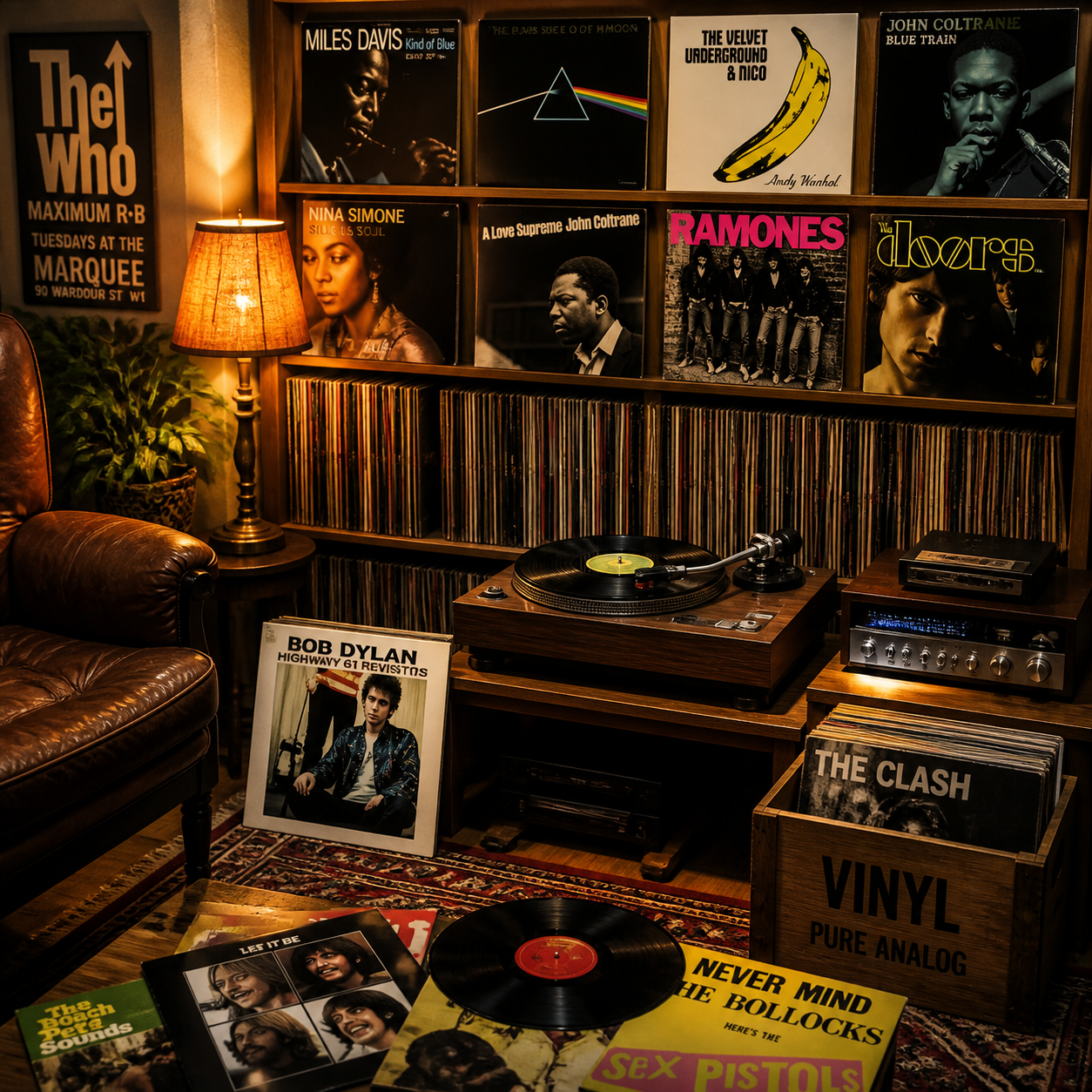
By the 1960s and 1970s, vinyl reached its commercial peak. Record pressing plants operated continuously to meet demand. Album artwork became an art form itself—the 12-inch LP cover provided a canvas that musicians and designers used to extend the creative vision of the music. Vinyl wasn't just how you heard music; it was how you experienced it as a complete artistic statement.
The Decline: CDs, Cassettes, and Digital Competition (1980s-1990s)
The compact disc arrived in 1982, offering advantages vinyl couldn't match: no surface noise, no degradation from repeated plays, smaller size, and the ability to skip directly to any track. CDs were marketed as indestructible and superior, even though early digital audio had its own limitations that audiophiles noticed immediately.
Vinyl sales collapsed with surprising speed. Between 1988 and 2000, vinyl production dropped by roughly 95% in the United States. Major labels stopped pressing vinyl albums entirely. Record stores cleared out their LP bins to make room for CD racks. Pressing plants shut down or converted to other manufacturing, and the skilled workers who knew how to make quality vinyl left the industry.
The reasons for vinyl's decline were practical rather than solely about sound quality. CDs were more convenient—no flipping sides, no worrying about scratches, easier to store. The music industry pushed the format aggressively because CDs were cheaper to manufacture and had higher profit margins. Consumers who'd built large vinyl collections often replaced them with CDs, sometimes buying the same albums twice.
By the late 1990s, vinyl seemed destined for complete obsolescence. Only DJs still bought records in significant numbers, valuing vinyl's tactile control for mixing. For everyone else, vinyl represented the past—something your parents owned, not something you'd choose to buy new.
The Vinyl Revival: Why Records Are Back (2000s-Present)
Vinyl sales began growing again in the mid-2000s, a trend that has continued for nearly two decades. In 2020, vinyl revenue surpassed CD revenue in the United States for the first time since 1986—a reversal almost no one predicted during vinyl's near-death in the 1990s.
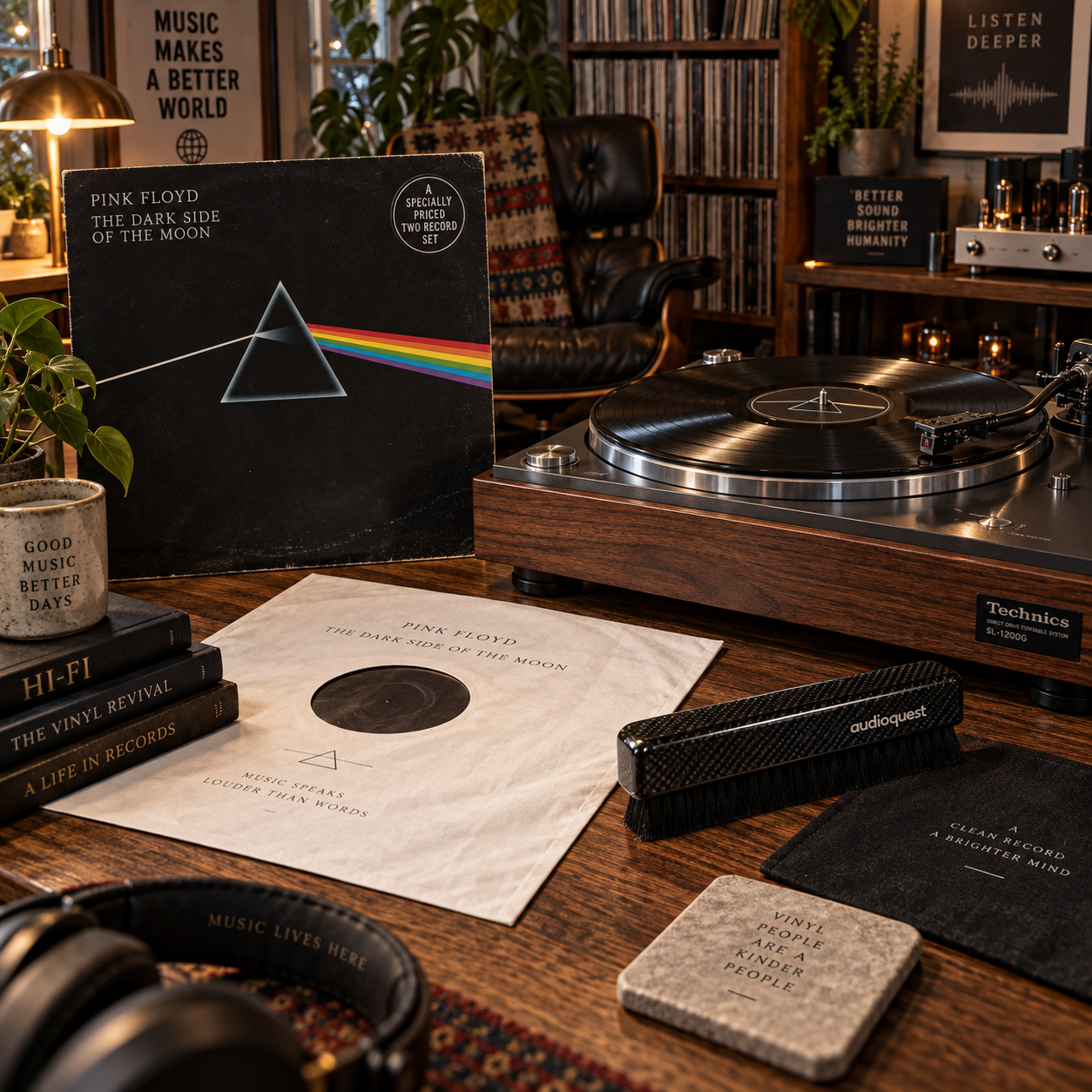
This revival stems from multiple factors working together. The shift to streaming made music intangible—you don't own files anymore, you rent access. For listeners who wanted something physical, vinyl offered more value than CDs. The larger format means better artwork, the ritual of playing a record feels more intentional than clicking play, and records function as displayable objects that express your taste and identity.
Audiophiles and collectors argue that analog sound has a warmth and depth that digital formats lose, though this claim remains debated. What's undeniable is the subjective listening experience: playing a record requires active participation. You can't shuffle or skip easily. This limitation becomes an advantage—it encourages listening to albums as complete works rather than cherry-picking tracks.
Younger generations who grew up with digital music found vinyl novel rather than outdated. Record Store Day, launched in 2007, created cultural events around vinyl releases. Artists began treating vinyl as a premium format, releasing special editions with colored vinyl, gatefold covers, and bonus material. Vinyl became a way to directly support musicians in an era when streaming pays fractions of a cent per play.
Modern Vinyl Culture: Collecting, Pressing, and the Future
Today's vinyl market faces challenges even as it thrives. Demand for new records exceeds production capacity because many pressing plants closed during vinyl's decline. Wait times for pressing new albums can stretch six months or longer. A handful of facilities press the majority of records worldwide, creating bottlenecks that frustrate labels and artists.
New pressing plants have opened to meet demand, but manufacturing quality vinyl requires expertise that takes years to develop. Poor pressings with surface noise, off-center holes, or warping frustrate collectors who've paid $30-40 for new albums. The vinyl community has become particular about pressing quality, researching which plants produced which editions before buying.
Environmental concerns shadow vinyl's revival. Manufacturing PVC releases harmful chemicals, and records aren't easily recyclable. Some companies experiment with recycled vinyl or alternative materials, but these remain niche efforts. Vinyl's sustainability problem doesn't have easy answers, especially when part of its appeal is durability—these objects are meant to last decades.
Despite these issues, vinyl occupies a stable place in contemporary music culture. It coexists with streaming rather than competing directly. Many listeners stream music for discovery and convenience, then buy vinyl copies of albums they love. This hybrid approach lets vinyl serve its current purpose: a tangible connection to music that matters to you personally.
The future likely holds continued growth, though at a sustainable rather than explosive pace. Vinyl will remain a minority format by volume—streaming dominates music consumption too thoroughly for that to change. But vinyl has secured its position as the preferred physical format for those who want one, supported by a community that values both the sound and the ritual.
Frequently Asked Questions
What year were vinyl records invented?
Vinyl records as we know them were introduced in 1948 when Columbia Records released the 33⅓ RPM LP format using polyvinyl chloride. However, the disc record format itself dates to Emile Berliner's gramophone invention in 1887, which originally used shellac rather than vinyl.
Why did vinyl records decline in popularity?
Vinyl declined primarily because CDs offered greater convenience—no surface noise, no side-flipping, direct track access, and smaller size. The music industry also pushed CDs aggressively due to higher profit margins, and by the late 1980s, vinyl pressing infrastructure began shutting down as sales collapsed.
What is the difference between 33⅓ and 45 RPM records?
33⅓ RPM records are 12-inch LPs designed for albums, holding approximately 22 minutes per side. 45 RPM records are 7-inch discs designed for singles, typically holding one song per side with slightly higher fidelity due to the faster rotation speed spreading the audio across more groove distance.
Why are vinyl records popular again?
Vinyl's revival stems from listeners wanting tangible music ownership in the streaming era, appreciation for larger album artwork, the intentional listening ritual records encourage, and the collectible nature of physical releases. Many buyers also prefer vinyl's analog sound characteristics and view records as a way to directly support artists.
Do vinyl records really sound better than digital?
This remains subjective and debated. Vinyl preserves analog warmth that some listeners prefer, but also introduces surface noise and degrades with play. High-resolution digital audio can technically reproduce more accurate sound, but the "better" format depends on individual listening preferences, equipment quality, and what sonic characteristics you value.