
Top 10 Must-Have Vinyl Records for Every Collector
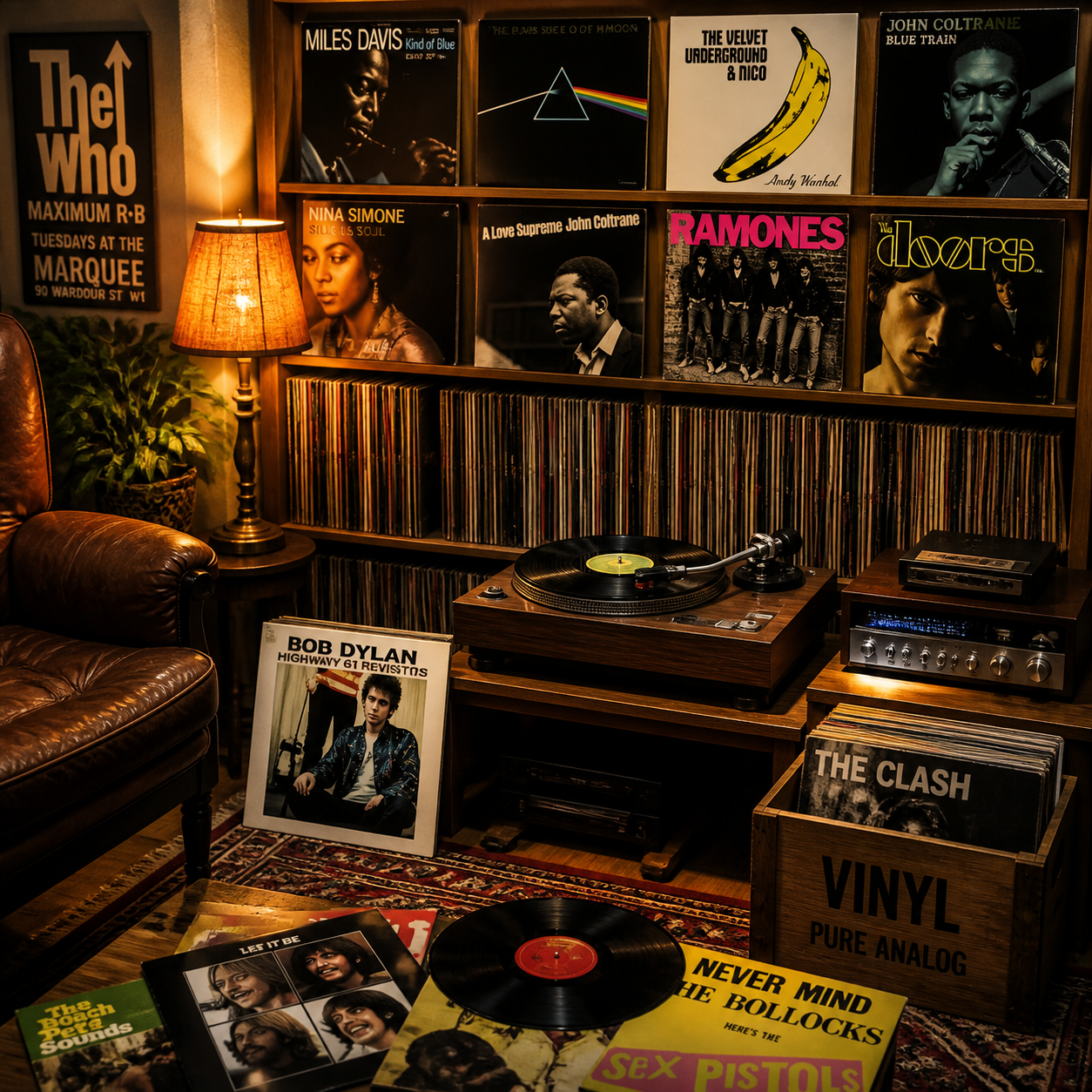
Building a vinyl collection can feel overwhelming. Thousands of albums deserve attention, and every collector has different tastes, budgets, and goals. A strong starting point combines influential music, memorable album artwork, reliable listening editions, and records that represent different eras and genres.
The following list is a flexible foundation rather than a strict rulebook. Some albums are culturally essential, while others earn their place through exceptional sound, design, or collector appeal. Where possible, beginners can choose affordable reissues before hunting for scarce original pressings.
What Makes a Vinyl Record a Must-Have?
A must-have vinyl record combines musical influence, historical importance, enjoyable sound, distinctive artwork, and lasting collector appeal. It should also be reasonably obtainable in at least one good-quality edition.
Rarity and price matter to some collectors, but they do not define an album’s importance. A common, clean reissue of a landmark record may provide more value than a damaged original pressing that costs several times as much.
- Musical influence: Did the album shape a genre, inspire later artists, or change studio and songwriting conventions?
- Historical importance: Does it capture a major cultural moment or an important stage in an artist’s career?
- Listening quality: Does the vinyl format reward repeated listening with a strong mastering and satisfying presentation?
- Album artwork: Is the sleeve visually distinctive enough to make the physical object part of the experience?
- Availability: Can collectors find a credible original pressing, reissue, or remaster without excessive risk?
- Collector appeal: Does the record offer interesting labels, matrix numbers, variants, inserts, or pressing history?
Think of the criteria as a five-part filter: cultural weight, personal enjoyment, sound, design, and accessibility. A record does not need to score perfectly in every category to belong in a collection.
Top 10 Must-Have Vinyl Records for Every Collector
These 10 essential albums give a vinyl collection breadth across rock, jazz, soul, folk, electronic music, hip-hop, and pop. Each record remains important because it offers a distinct combination of artistic impact, physical presentation, and listening value.
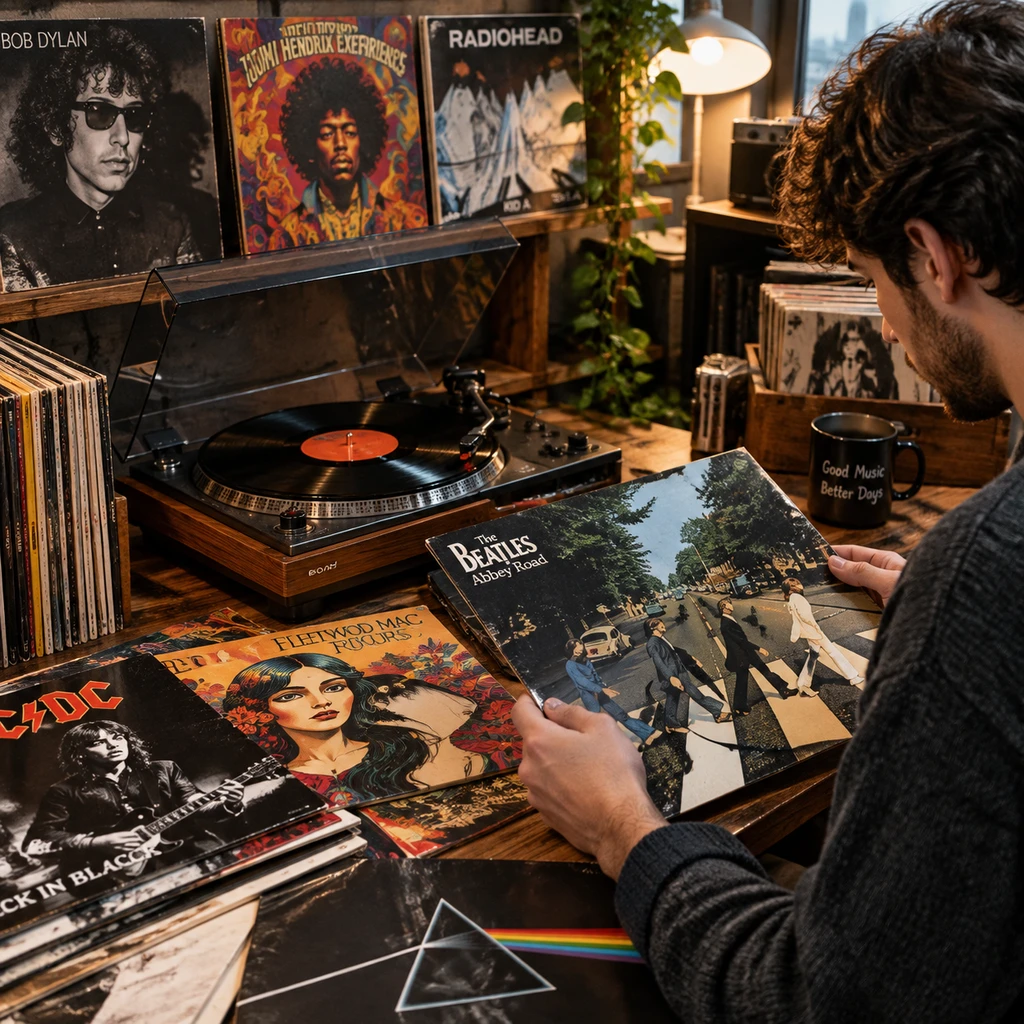
1. The Beatles – Abbey Road (1969)
Abbey Road is a cornerstone of record collecting because it brings together inventive production, melodic songwriting, and one of the most recognizable album covers ever made. The side-two medley demonstrates how a studio album can feel like a carefully constructed journey rather than a loose set of songs.
Original UK pressings attract collectors, but well-mastered reissues are often easier for beginners to find and play. Check that the sleeve, inner sleeve, and record match the advertised edition.
2. Miles Davis – Kind of Blue (1959)
Kind of Blue belongs in almost every well-rounded collection because it presents modal jazz with remarkable clarity and restraint. Miles Davis, John Coltrane, Cannonball Adderley, Bill Evans, Paul Chambers, and Jimmy Cobb created a record that works for focused listening, quiet evenings, and repeated play.
Jazz collectors often pay close attention to label design, catalog numbers, and mastering history. A clean modern reissue can be an excellent entry point when a vintage mono pressing is too expensive or difficult to authenticate.
3. Marvin Gaye – What’s Going On (1971)
Marvin Gaye’s What’s Going On is essential for its seamless blend of soul, orchestration, social commentary, and intimate vocals. Its themes remain emotionally direct, while the album’s flowing structure rewards listening from beginning to end.
It also demonstrates why vinyl collecting extends beyond rock. The gatefold artwork and warm, layered production make the physical album especially satisfying. Look for a pressing with quiet surfaces, since softer passages can reveal clicks and background noise.
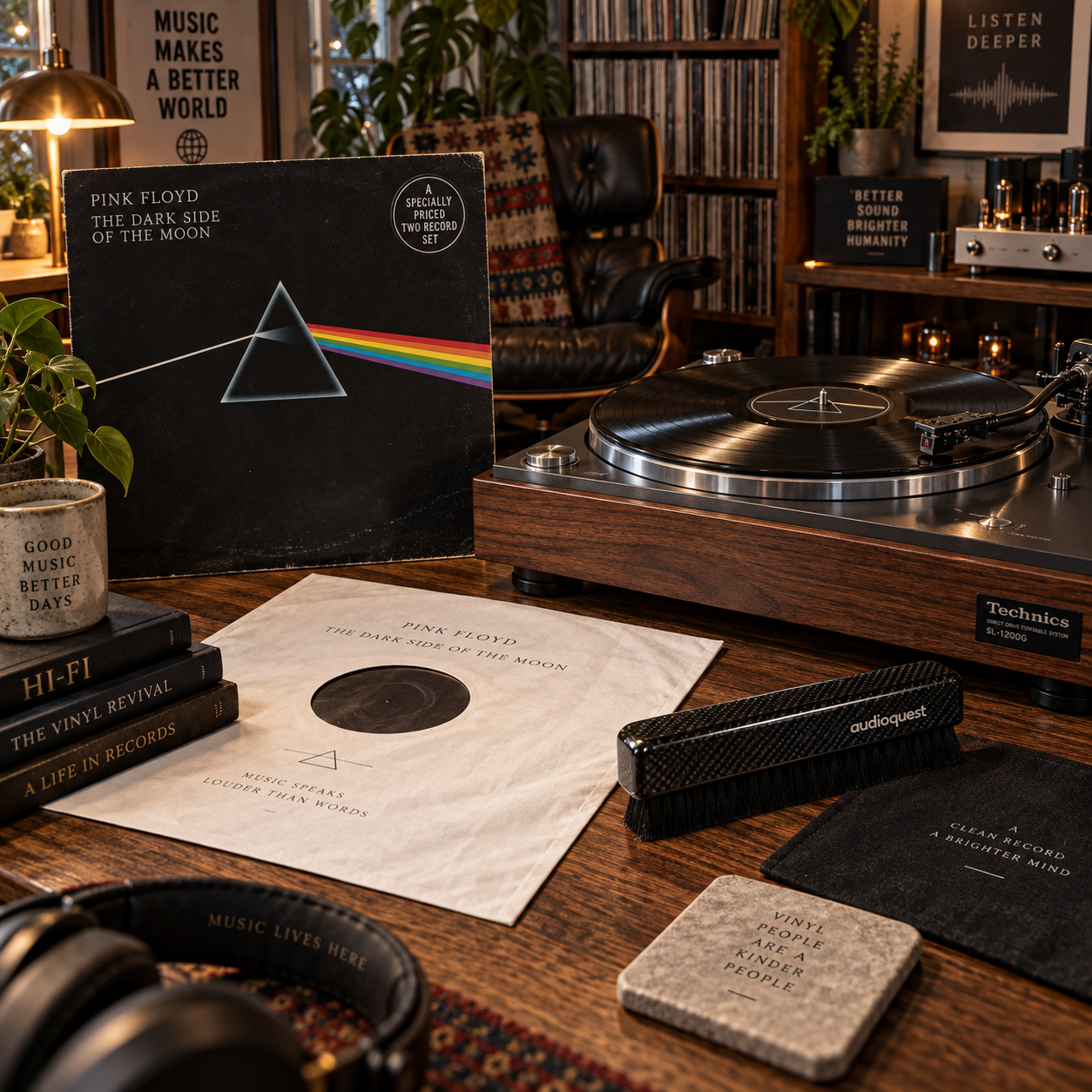
4. Pink Floyd – The Dark Side of the Moon (1973)
The Dark Side of the Moon is a must-have for its ambitious sequencing, immersive studio effects, and instantly identifiable artwork. The record helped establish the album as a complete audiovisual statement, with the prism design becoming a defining image in popular music.
There are many pressings and reissues, so edition details matter. Beginners should prioritize a clean, correctly identified copy over a supposedly rare version with groove wear, seam splits, or a heavily marked sleeve.
5. Fleetwood Mac – Rumours (1977)
Rumours combines polished production, emotionally charged songwriting, and broad appeal across pop and rock audiences. Songs such as Dreams, Go Your Own Way, and The Chain make it both a historically important album and a practical record for frequent listening.
Its popularity means affordable copies are common. That is useful for new collectors: you can often find a playable example without paying a premium for an original pressing.
6. Bob Dylan – Highway 61 Revisited (1965)
Highway 61 Revisited represents a crucial moment in folk-rock, pairing Bob Dylan’s sharp lyrics with electric blues, restless arrangements, and a more expansive band sound. It belongs in a collection that values songwriting and the evolution of popular music.
When shopping, inspect the record for scratches that cause repeating clicks. Dylan’s quieter vocal passages and acoustic details make surface noise more noticeable than it may be on a loud, heavily compressed rock album.
7. David Bowie – The Rise and Fall of Ziggy Stardust and the Spiders from Mars (1972)
David Bowie’s Ziggy Stardust is essential because it unites character, concept, glam-rock performance, and striking sleeve design. It shows how an album can function as music, theatrical world-building, and collectible visual culture at the same time.
Original pressings can carry strong collector appeal, particularly when they include the correct inner sleeve and label details. A reputable reissue remains a sensible choice for listeners who want the music without the cost of vintage collecting.
8. Nirvana – Nevermind (1991)
Nevermind captures the early-1990s alternative-rock shift and remains a key document of grunge’s impact on mainstream music. Its combination of raw energy, concise songwriting, and polished production makes it accessible to new listeners and significant to experienced collectors.
Because the album has appeared in numerous editions, compare mastering information and pressing quality before buying. A clean, affordable reissue may outperform a worn early copy in everyday use.
9. Public Enemy – It Takes a Nation of Millions to Hold Us Back (1988)
Public Enemy’s It Takes a Nation of Millions to Hold Us Back expands the essential collection into hip-hop, where sampling, political expression, dense production, and rhythmic architecture are central to the album’s identity. The Bomb Squad’s production remains a major reference point in studio-based music.
Hip-hop records can be especially sensitive to groove wear because bass-heavy passages expose damage quickly. Check both records in a double-album set and confirm that inserts or original artwork are included when advertised.
10. Radiohead – OK Computer (1997)
OK Computer completes the list with an ambitious record that blends alternative rock, electronic textures, unusual arrangements, and themes of technology and disconnection. It is an important example of a late-1990s album designed for concentrated, full-length listening.
Collectors may encounter standard editions, anniversary releases, and colored vinyl. Colored vinyl can look attractive, but color alone does not guarantee better sound. Pressing quality, mastering, and condition deserve closer attention.
Building a Balanced Vinyl Collection
A balanced vinyl collection combines landmark albums with personal favorites across genres, decades, artists, and recording styles. Use the 10 records above as anchors, then expand according to the music you actually play.
One useful approach is the 70/20/10 model: spend roughly 70% of your budget on albums you already know you enjoy, 20% on historically important discoveries, and 10% on unusual editions or adventurous blind buys. The ratio is flexible, but it prevents a shelf from becoming a museum of records you never listen to.
- Choose several decades to understand how recording and mastering changed over time.
- Mix studio albums with live recordings, compilations, and soundtracks.
- Include both familiar artists and influential musicians you have not explored deeply.
- Keep space for local artists, independent labels, and records tied to personal memories.
Record players make the collection active rather than decorative. Before buying a rare copy, ask a simple question: will this record make you want to sit down and listen?
Original Pressings vs. Reissues
The main difference is that an original pressing was produced near an album’s initial release, while a reissue was manufactured later, often with updated mastering, packaging, or source material. Neither format is automatically superior.
Original pressings
Original editions may offer period-correct artwork, historic label designs, and a closer connection to the album’s first release. Their limitations include higher prices, uncertain storage history, groove wear, and counterfeit risk.
Reissues and remasters
Reissues can provide cleaner vinyl, improved packaging, and easier availability. A remaster may sound clearer, louder, or more balanced, but it may also differ noticeably from the original mastering. Read the release notes and compare catalog numbers rather than relying on words such as deluxe or audiophile.
Special pressings, including numbered editions, colored vinyl, and half-speed masters, can be attractive collectible pressings. Their desirability depends on pressing quantity, mastering, condition, and documentation, not marketing language alone.
How to Assess Condition and Value
To assess a vinyl record, inspect the disc and sleeve separately, identify the exact pressing, and judge playback quality rather than appearance alone. Condition and edition details usually influence desirability more than age by itself.
Most sellers use a version of the Goldmine grading scale:
- Mint: Essentially perfect and usually unplayed, though genuine mint copies are uncommon.
- Near Mint: Nearly flawless with minimal signs of handling and excellent expected playback.
- Very Good Plus: Light wear may be present, but the record should play strongly with limited noise.
- Very Good: Noticeable wear and surface noise are possible, yet the record remains playable.
- Good: Significant wear, scratches, or noise may affect enjoyment and value.
Inspect the vinyl under a bright light for scratches, warping, cloudy patches, and excessive spindle marks. For the sleeve, check seam splits, water damage, writing, fading, ring wear, and missing inserts. Finally, confirm matrix numbers, label variations, country of manufacture, and included artwork.
A rare pressing in poor condition may be less desirable than a common clean copy. Value is a combination of scarcity, demand, authenticity, completeness, and playability.
Tips for Buying the Records on Your List
To buy wisely, set a record-by-record budget, verify the pressing, inspect seller information, and compare several copies before paying a premium. A buying plan reduces impulse purchases and leaves money for records you genuinely want.
- Write down the album, preferred edition, acceptable condition, and maximum price.
- Compare listings using catalog numbers, photographs, grading notes, and seller history.
- Ask whether the record has been play-tested, especially when the listing uses vague grading.
- Buy from reputable record shops when you need guidance or want to inspect a copy in person.
- Keep shipping costs and return policies in your calculation.
Common mistakes include assuming an old record is automatically valuable, buying colored vinyl without checking its mastering, and trusting a seller’s grade without photographs. Correct these errors by learning basic vinyl grading and using reliable discography information. Discogs can help identify editions, while the Library of Congress National Jukebox offers useful historical context for recorded sound.
Caring for and Displaying Your Vinyl Collection
Store vinyl records upright in a cool, dry, stable environment, using protective sleeves and careful handling to prevent warping, dust, and sleeve damage. Good storage protects both sound quality and album artwork.
- Keep records vertical with firm support; leaning stacks can warp over time.
- Use anti-static inner sleeves and polyethylene outer sleeves instead of abrasive paper or loose plastic.
- Store records away from radiators, direct sunlight, damp walls, and attic heat.
- Handle discs by the edges and label, never by the playing surface.
- Dry-brush dust before playing and wet-clean records when contamination or static requires it.
- Do not overpack shelves; allow enough room to remove albums without bending sleeves.
Display a favorite album briefly rather than leaving it in sunlight for months. A record player should sit on a stable surface, and the stylus should be clean and properly aligned. Care is less complicated than it sounds: protect the grooves, control the environment, and handle every record deliberately.
Frequently Asked Questions
What vinyl records should every beginner collect?
Beginners should start with accessible, playable editions of influential albums such as Abbey Road, Kind of Blue, Rumours, and What’s Going On. Add records you already enjoy so the collection remains personal.
Are original pressings always better than reissues?
No. Original pressings can offer historical and collector appeal, but a well-produced reissue may have quieter vinyl and better availability. Compare the specific mastering and condition.
How can I tell if a vinyl record is in good condition?
Look for light surface marks rather than deep scratches, check the sleeve for damage, and ask whether the record has been play-tested. Near Mint and Very Good Plus copies generally offer the best balance of quality and price.
Should I prioritize rare records or albums I enjoy listening to?
Prioritize albums you enjoy listening to, then add rare or collectible pressings when the price and condition make sense. Rarity is meaningful only when it aligns with demand and personal interest.
How should vinyl records be stored?
Store them upright in protective sleeves, away from heat, sunlight, moisture, and pressure. Keep shelves stable and avoid tight packing that can damage jackets or make handling difficult.