Vinyl vs. Digital: Sound Quality and Listening Experience Compared
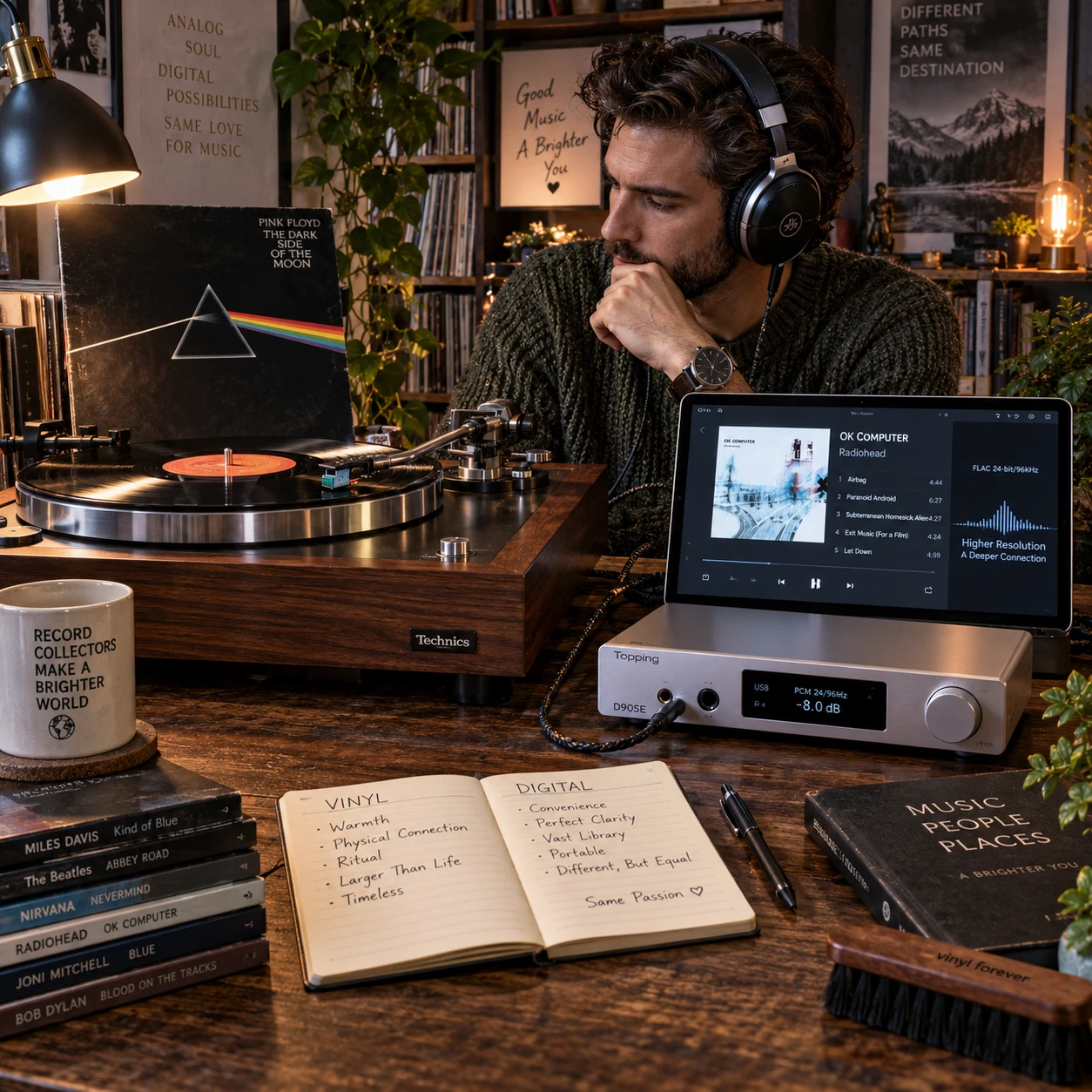
Vinyl and digital audio can both deliver rewarding, high-quality listening, but they do it in different ways. Vinyl records offer physical interaction and the distinctive character of analog playback; digital audio offers convenient access, portability, and consistent playback. Neither format automatically sounds better. The recording, mastering, condition of the release, and playback equipment all shape what you hear.
What “Sound Quality” Means in Practice
Sound quality describes how clearly and convincingly a recording comes through, including its detail, dynamics, tonal balance, and noise. Whether vinyl or digital sounds better depends on which qualities matter to you and how each version was made and played.
Clarity is how easily you can hear instruments and vocals without muddiness. Detail refers to subtle elements such as a singer’s breath or the decay of a cymbal. Dynamics describe the difference between quiet and loud passages, while noise includes anything audible beyond the recorded performance.
These terms do not create a universal ranking. A clean, well-mastered digital file can reproduce very quiet details with little background noise. A well-preserved record can sound rich and engaging, though its surface may add clicks or hiss. Some listeners enjoy vinyl’s presentation; others prefer the clean separation they hear from digital. Those are valid preferences, but they are not proof that one format is always more accurate.
It helps to separate two questions: What can the format reproduce? and Which version do I enjoy hearing? The first can involve measurable properties. The second includes the mastering, playback chain, listening room, and your own taste.
How Vinyl and Digital Playback Differ
Vinyl stores sound as physical groove variations, while digital audio represents sound as numerical samples that a DAC converts into an analog signal. Both playback paths turn a recording into sound from speakers or headphones, but they use different components and can introduce different limitations.
With a record, the turntable spins the disc while the stylus follows the groove. The stylus and cartridge convert groove movement into an electrical signal. Because that signal is low-level, it passes through a phono preamp, which boosts it and applies the equalization needed for playback. The signal then travels to an amplifier and speakers or headphones.
Digital audio follows a different route. A file or stream contains encoded audio data; a digital-to-analog converter (DAC) turns that data into an analog signal for your audio system. The source might be a phone, computer, CD player, or streaming device. The DAC may be built into the device or supplied as a separate component.
Each path has practical constraints. Vinyl playback depends on record condition, turntable setup, cartridge alignment, and the quality of the stylus and phono preamp. Digital playback depends on the source file or stream, software, DAC, and output system. A poor setup can undermine either format, so comparing only the record and file misses much of the story.
Sound Quality: The Role of Mastering and Equipment
Mastering and playback equipment often explain more of the difference between two releases than the vinyl or digital label alone. A vinyl pressing and a digital release can sound different because they use different masters, while a carefully set-up system helps each format perform at its best.
Mastering prepares audio for a particular release. Engineers may make different choices for a vinyl edition and a digital version, so the two can vary in loudness, tonal balance, or dynamics. A difference you notice may come from those choices rather than an unavoidable property of analog or digital audio. Even two digital releases of the same album can differ if they use different masters.
Equipment matters, too. A worn or dirty stylus can affect how a record plays, and an incorrectly aligned cartridge may cause distortion or uneven tracking. Poor record storage can lead to warping or damage. For digital, a low-quality source or poorly configured playback system can limit the result; upgrading a DAC will not restore detail missing from a recording.
For a useful comparison, match the listening level as closely as possible and use the same speakers or headphones. Check that you are comparing the same track and, if possible, the same master. Otherwise, the louder or differently balanced version may seem better simply because it presents the music differently.
A practical collector’s rule is to judge the specific release and system, not the format in isolation. A great pressing can be a pleasure to own, but an excellent digital master may be the version that best suits careful listening.
The Vinyl Listening Experience
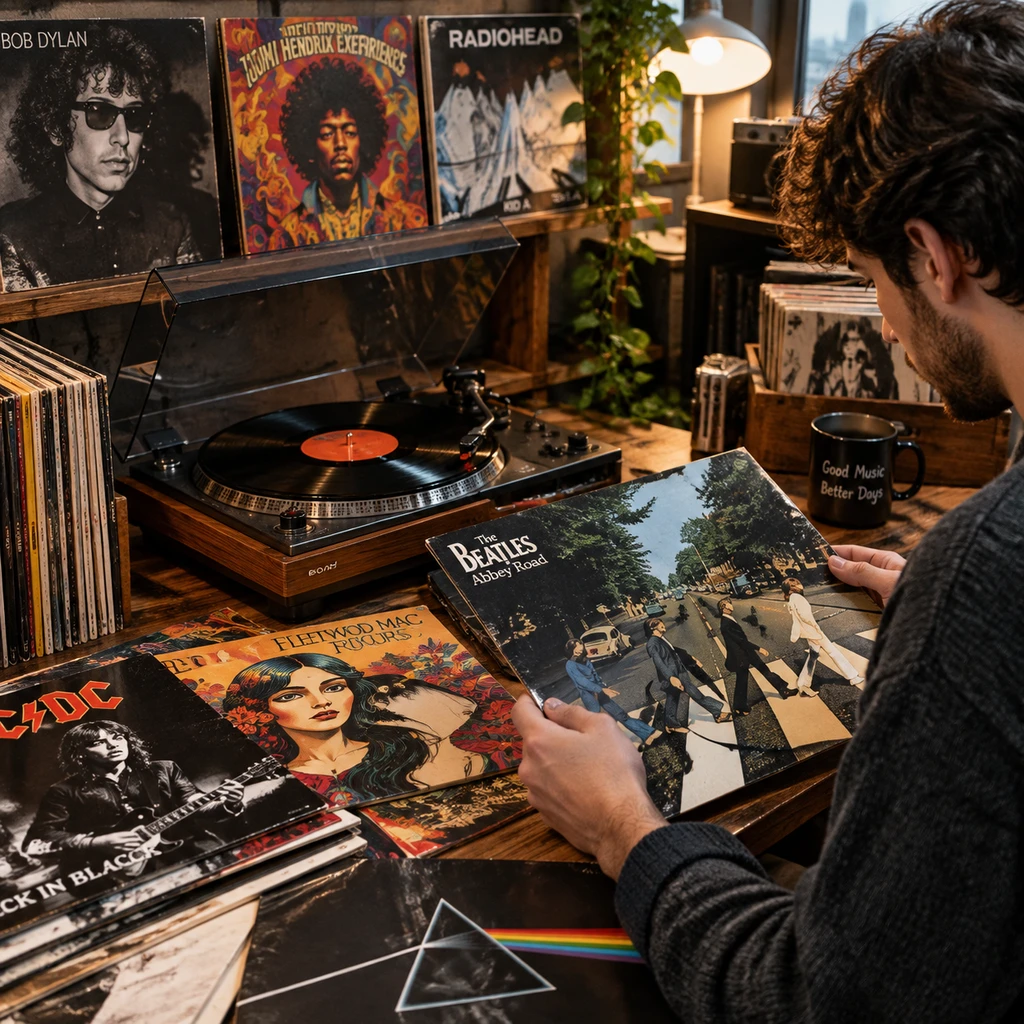
Vinyl offers a hands-on listening experience built around choosing a record, placing it on a turntable, and playing a side from beginning to end. That ritual can make listening feel more focused, though it also asks for care, space, and occasional maintenance.
Handling the sleeve, reading liner notes, and seeing the record turn are part of the appeal for many collectors. A side break also creates a natural pause: you need to flip the record rather than let an album play uninterrupted in the background. Some listeners welcome that attention; others find it inconvenient during work, travel, or gatherings.
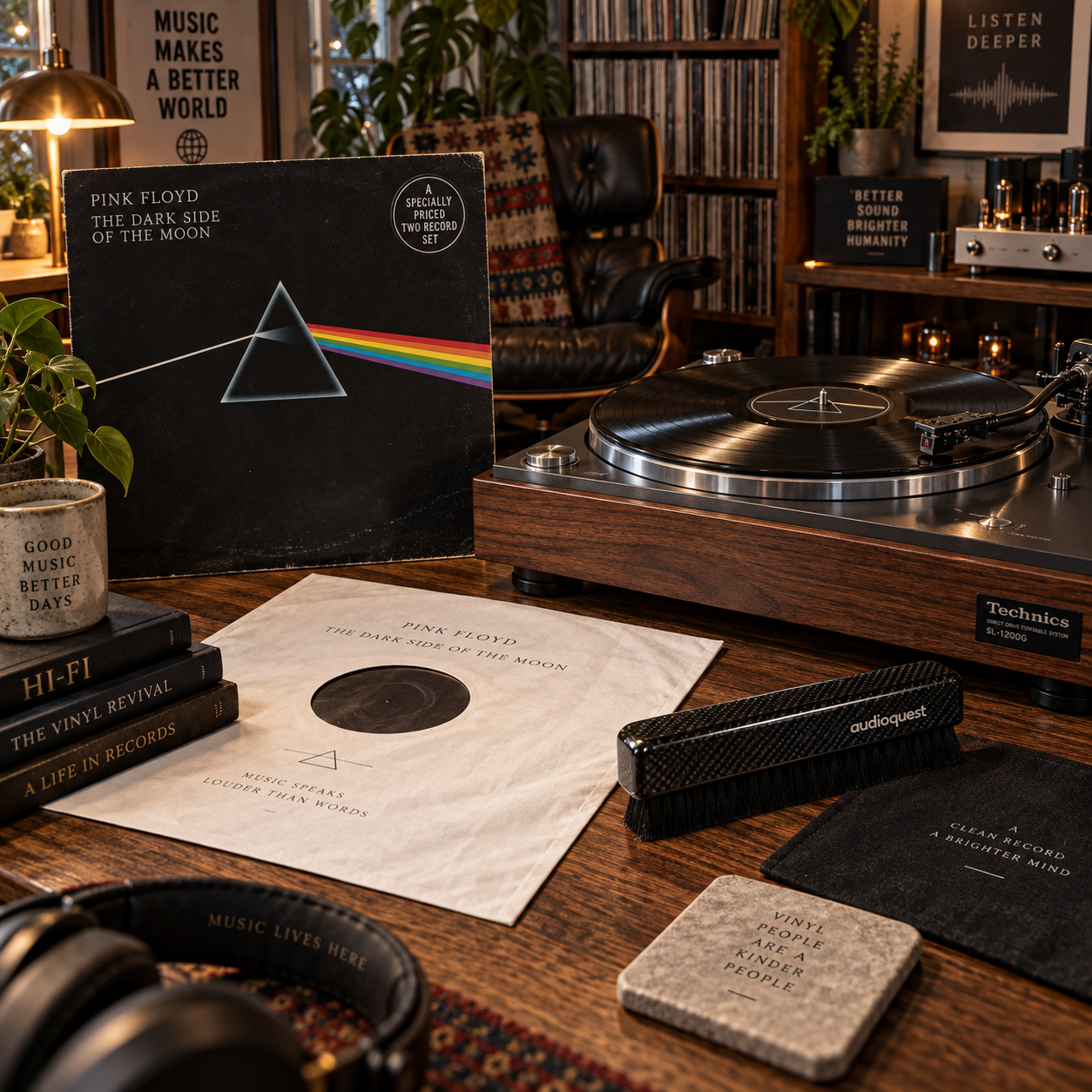
Surface noise may include faint hiss, crackle, or occasional clicks. It can come from dust, static, wear, scratches, or the pressing itself. A little noise does not automatically mean a record is damaged, but repeated loud clicks or distortion may point to dirt or physical wear. Cleaning records with suitable methods and handling them by the edges can help reduce avoidable noise. Cleaning cannot repair a deep scratch or restore worn grooves.
Vinyl also takes more upkeep than pressing play on a stream. Records need safe storage, a clean stylus, and a stable turntable setup. In return, the format gives you a physical collection and a deliberate way to spend time with an album. Whether that feels satisfying or fussy is personal.
The Digital Listening Experience
Digital audio makes it easy to play music on demand, move between devices, and carry a large library without carrying records. Its convenience is a major strength, although streaming quality and playback equipment can vary.
Streaming audio offers broad access to music through phones, computers, smart speakers, and dedicated players. Digital files can also be stored offline, and many services let listeners build playlists or explore unfamiliar albums quickly. There is no stylus to replace and no record to clean before playing.
The sound depends on the source. Streaming services may offer different audio quality settings, and a file can be compressed or lossless depending on the service and subscription. Network conditions can affect playback if music is not downloaded. The DAC, headphones, speakers, and device settings also matter; a high-resolution file alone does not guarantee an audible improvement in every setup.
Digital playback is often the practical choice for commuting, travel, background listening, and quick access to a wide catalog. It can also be excellent for close listening, especially with a good master and capable equipment. The trade-off is less physical connection to the album, and streaming availability can change as catalogs and licensing arrangements shift.
Which Format Fits Your Listening Habits?
Choose vinyl if you value collecting, physical artwork, and a focused ritual; choose digital if you prioritize portability, instant access, and simple playback. Many record collectors use both, selecting the format that fits the moment rather than treating them as rivals.
Use this quick guide to decide what belongs in your listening routine:
- For album-focused evenings: Vinyl can make a full side feel like an intentional listening session, provided you are happy to handle and maintain records.
- For travel and everyday convenience: Digital audio is easier to carry, search, and play across devices.
- For building a physical collection: Vinyl provides sleeves, artwork, and a tangible connection to a release, but costs space and needs careful storage.
- For exploring new music: Streaming audio offers quick access to a broad catalog, though availability depends on the service.
- For sound comparisons: Check the mastering and playback setup before deciding that one format is responsible for a difference.
A useful approach is to treat each format as serving a different job. Keep vinyl for albums you enjoy owning and playing deliberately; use digital for discovery, convenience, and music on the move. If you love listening to both, there is no technical or cultural rule that says you must pick a side.
Frequently Asked Questions
These answers clarify common questions about vinyl sound quality, digital releases, surface noise, and the equipment needed for analog playback.
Does vinyl always sound better than digital?
No. Sound depends on the mastering, condition of the record or file, playback equipment, and personal preference. A clean digital release can be quiet and detailed, while a well-made vinyl pressing can offer a presentation a listener prefers.
Can a digital release sound different from a vinyl pressing?
Yes. The releases may use different masters or mastering choices, and vinyl playback introduces its own physical characteristics. Compare versions at similar volume and check whether they share the same master before attributing the difference to format alone.
Does surface noise mean a record is damaged?
No. Dust, static, or a pressing’s character can create noise, and a little crackle does not necessarily indicate damage. Persistent loud clicks, skips, or distortion may suggest dirt, wear, or a scratch.
What equipment is needed to play vinyl?
You need a turntable with a stylus and cartridge, a phono preamp, an amplifier or compatible powered speakers, and speakers or headphones. Some turntables include a phono preamp, so check the model’s connections before adding a separate one.
Can collectors enjoy vinyl and digital audio equally?
Yes. Vinyl can offer a tactile, focused ritual, while digital provides easy access and portability. Many collectors use both, choosing according to the album, listening situation, and version they prefer.